
Schedule a tune-up
Tell us about your system and location so we can help connect you with a local technician.
A mini split that is never cleaned loses efficiency gradually, which often goes unnoticed until the energy bill or a full breakdown makes it obvious. Dust, pet hair, and general household debris build up on filters and coils over time, restricting airflow and forcing the system to work harder for the same result. National Mini Split Pros helps connect homeowners and businesses with local HVAC professionals for mini split cleaning and tune-up service.
Unlike central systems, mini splits have an indoor coil that is directly exposed to room air every time the fan runs, which means the indoor unit tends to accumulate buildup faster than people expect, especially in homes with pets or in areas with high pollen counts.
Tell us about your system and location so we can help connect you with a local technician.
A local HVAC professional who services mini splits in your area will reach out to schedule the visit.
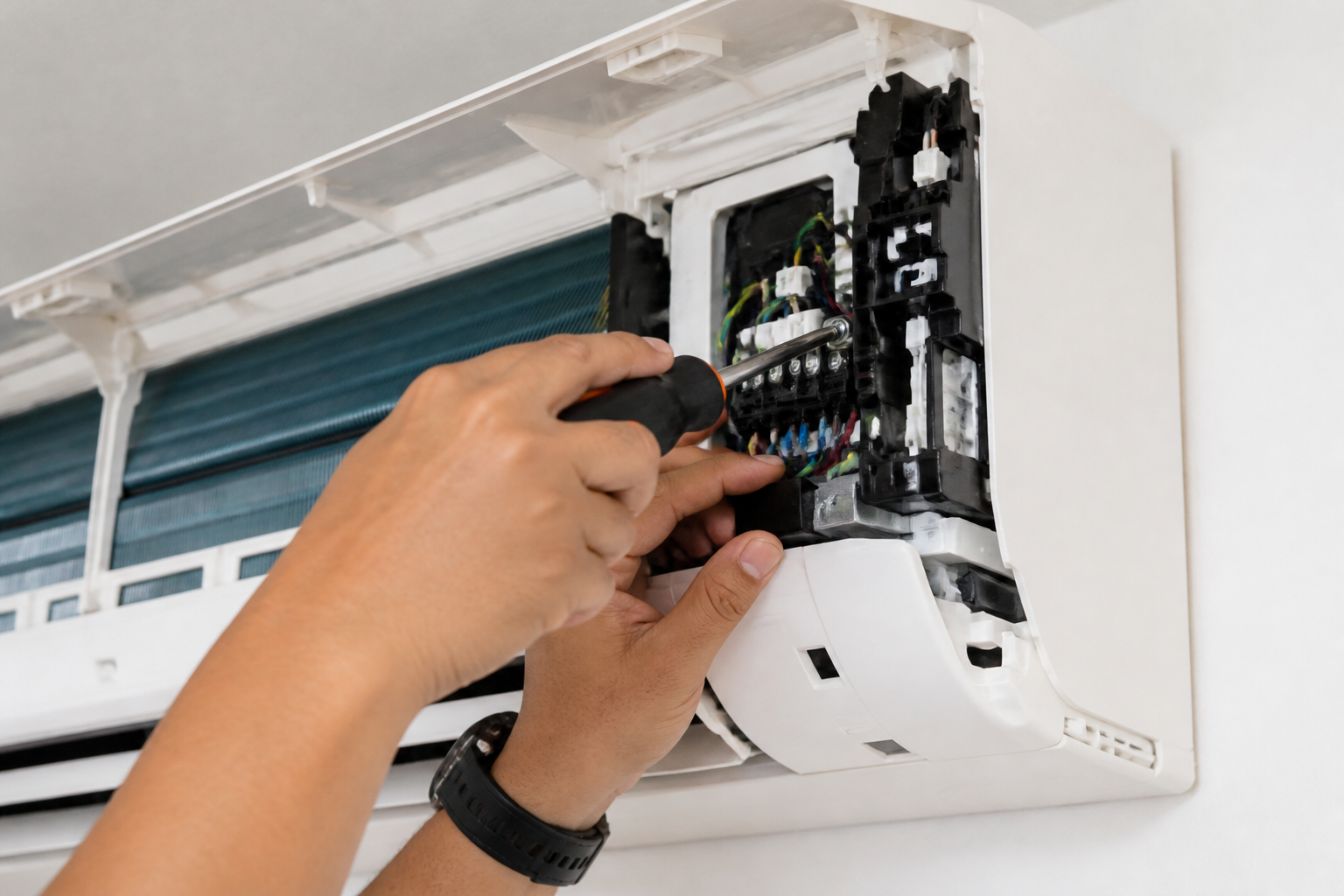
The technician cleans the filters and coil, checks the condensate drain, and inspects the system for early signs of wear.
A thorough mini split cleaning typically includes removing and washing or replacing the air filters, cleaning the indoor evaporator coil and blower wheel, flushing the condensate drain line to prevent clogs, and wiping down the outdoor unit's condenser coil, which collects leaves, dust, and debris from being outside year-round.
Some technicians also check refrigerant pressure and electrical connections as part of a tune-up, which can catch a developing issue, such as a slightly low refrigerant charge, before it becomes a full breakdown.
A clean system does not just run more efficiently, it also tends to last longer, since a dirty coil or blocked drain can stress components that then wear out faster. Indoor air quality is affected too: a mini split with a moldy coil or a dust-caked filter can recirculate particles and odors into the room every time it runs.
For homes with allergy sufferers, pets, or anyone sensitive to indoor air quality, keeping the filter clean between professional visits (most manufacturers recommend every two to four weeks) makes a noticeable difference on top of an annual tune-up.
A system that has gone a long time without cleaning often shows it in more than one way at once: reduced airflow, a musty smell on startup, visible dust accumulation on the intake grille, and water pooling near the indoor unit if the drain has partially clogged. Any of these alone is worth a look, but several appearing together usually means the system is overdue.
In more neglected cases, a buildup of dust and debris on the blower wheel can also create a rattling or whistling noise as the fan spins unevenly, which clears up once the wheel is cleaned. Catching this before it causes a bigger mechanical issue is one more reason a regular cleaning schedule pays for itself over time.
Most manufacturers recommend checking and rinsing the filters every two to four weeks, more often if you have pets or run the system constantly.
The filters are designed for homeowner access, but the evaporator coil behind them requires removing covers and using the right cleaning solution, which is better left to a trained technician.
A clean filter and coil reduce the dust, pollen, and mold spores the system recirculates, which can help allergy symptoms for some people, though individual results vary.
A standard cleaning and tune-up for a single-zone system is usually completed within an hour or two. Multi-zone systems take longer depending on the number of indoor units.
Call National Mini Split Pros and we'll help connect you with a local HVAC professional for mini split cleaning.