
Describe what's happening
Tell us exactly what the system is doing: is air blowing, is it warm, did it stop working suddenly or gradually.
A mini split that powers on, runs, and blows air but never actually cools the room is one of the most common complaints HVAC technicians hear, and it can stem from several different causes that are easy to confuse without a proper inspection. National Mini Split Pros helps connect homeowners and businesses with local HVAC professionals who diagnose and fix cooling failures in ductless systems.
Because the symptom looks the same regardless of cause (warm or room-temperature air coming from the indoor unit), the real issue could be anything from a simple dirty filter to a refrigerant leak, and guessing at a fix often wastes time and money.
Tell us exactly what the system is doing: is air blowing, is it warm, did it stop working suddenly or gradually.
We help connect you with a local HVAC professional who handles ductless cooling diagnostics.
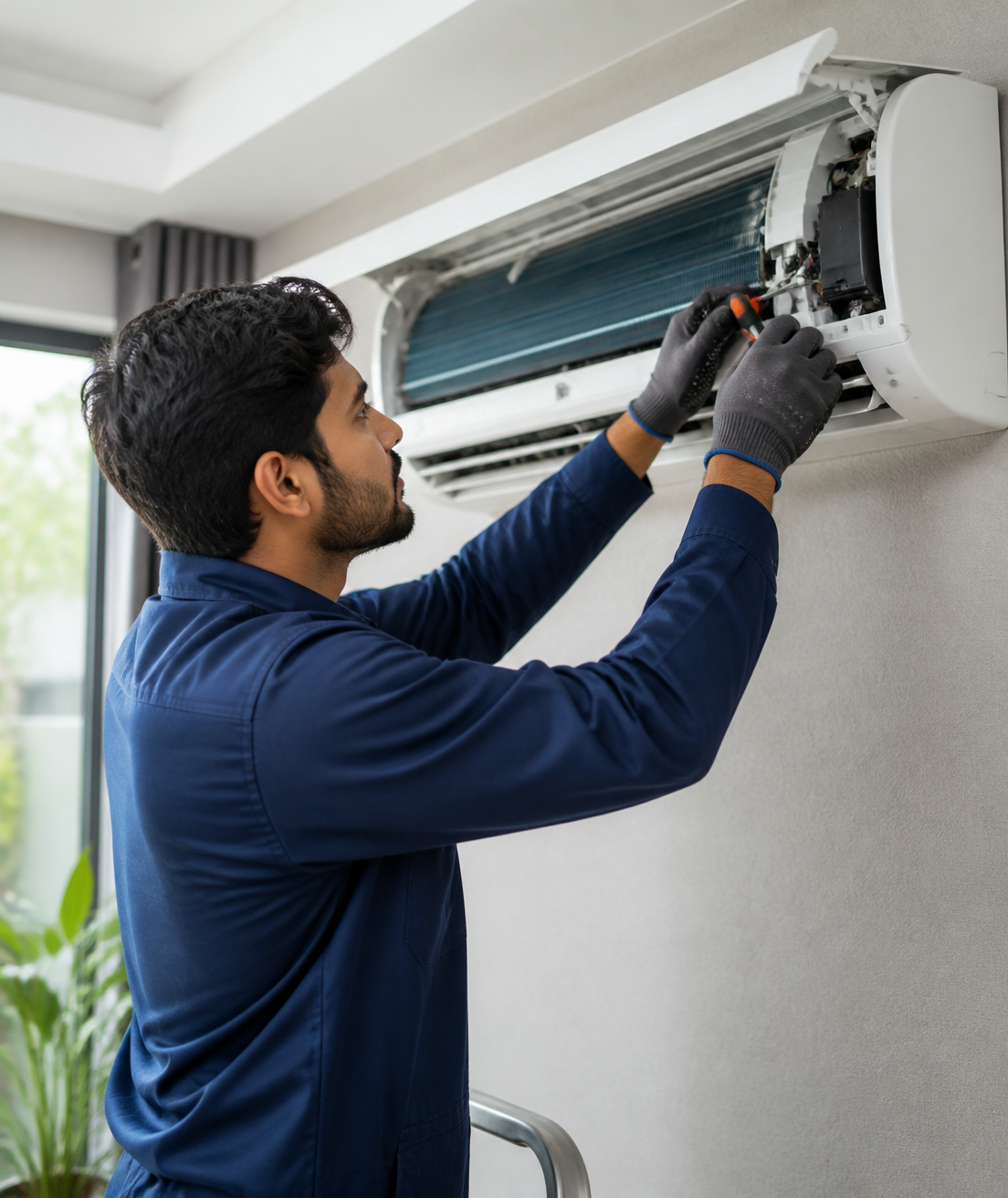
The technician checks the filter, coil, refrigerant charge, and electrical components to find the actual cause.
A dirty air filter or a frozen evaporator coil restricting airflow is one of the most frequent and least expensive causes of a mini split that will not cool, and often the easiest for a homeowner to rule out by checking and cleaning the filter first. Low refrigerant from a leak is another leading cause, usually accompanied by ice buildup on the coil or line set.
A failed compressor, a bad capacitor preventing the outdoor fan or compressor from starting, or a blocked outdoor condenser coil (leaves, debris, or dirt restricting airflow to the outdoor unit) round out the most common culprits. In some cases, the thermostat setting or remote communication itself is the problem rather than the cooling system.
A technician diagnosing a no-cool call typically starts by confirming the thermostat setting and mode, then checks whether the outdoor unit is running at all. If it is not, they check electrical components like capacitors and contactors. If the outdoor unit runs but cooling is still weak, they check refrigerant pressures and inspect both coils for restriction, ice, or dirt buildup.
This structured process is why a proper diagnosis from a qualified technician, rather than a guess, is the faster and cheaper path to a fix in most cases, even though it may feel like an extra step when the problem seems obvious.
A few quick checks can sometimes resolve the issue without a service call, or at least help the technician diagnose it faster over the phone. Confirm the remote or app is actually set to cooling mode and a temperature below the current room temperature, since a mode mistake is an easy thing to overlook. Check that the circuit breaker for the outdoor unit has not tripped, and look at the filter to see if it is visibly clogged.
If none of that resolves it, avoid repeatedly power-cycling the system, which can sometimes mask or complicate the underlying issue for a technician trying to diagnose a fault code or intermittent behavior when they arrive.
This can be caused by several things, from a dirty filter to low refrigerant to a compressor issue. A technician inspection is needed to pinpoint the actual cause.
If the outdoor unit never starts while the indoor fan runs, that often points to an electrical issue, such as a failed capacitor or a tripped breaker, rather than a refrigerant problem.
No, refrigerant handling requires EPA certification, and simply adding refrigerant without finding the underlying leak is not a lasting fix.
Many no-cool diagnostics can be completed in a single visit, though the timeline depends on local technician availability and the complexity of the issue found.
Call National Mini Split Pros and we'll help connect you with a local HVAC professional for mini split not cooling repair.